
Belonging begins with a conversation
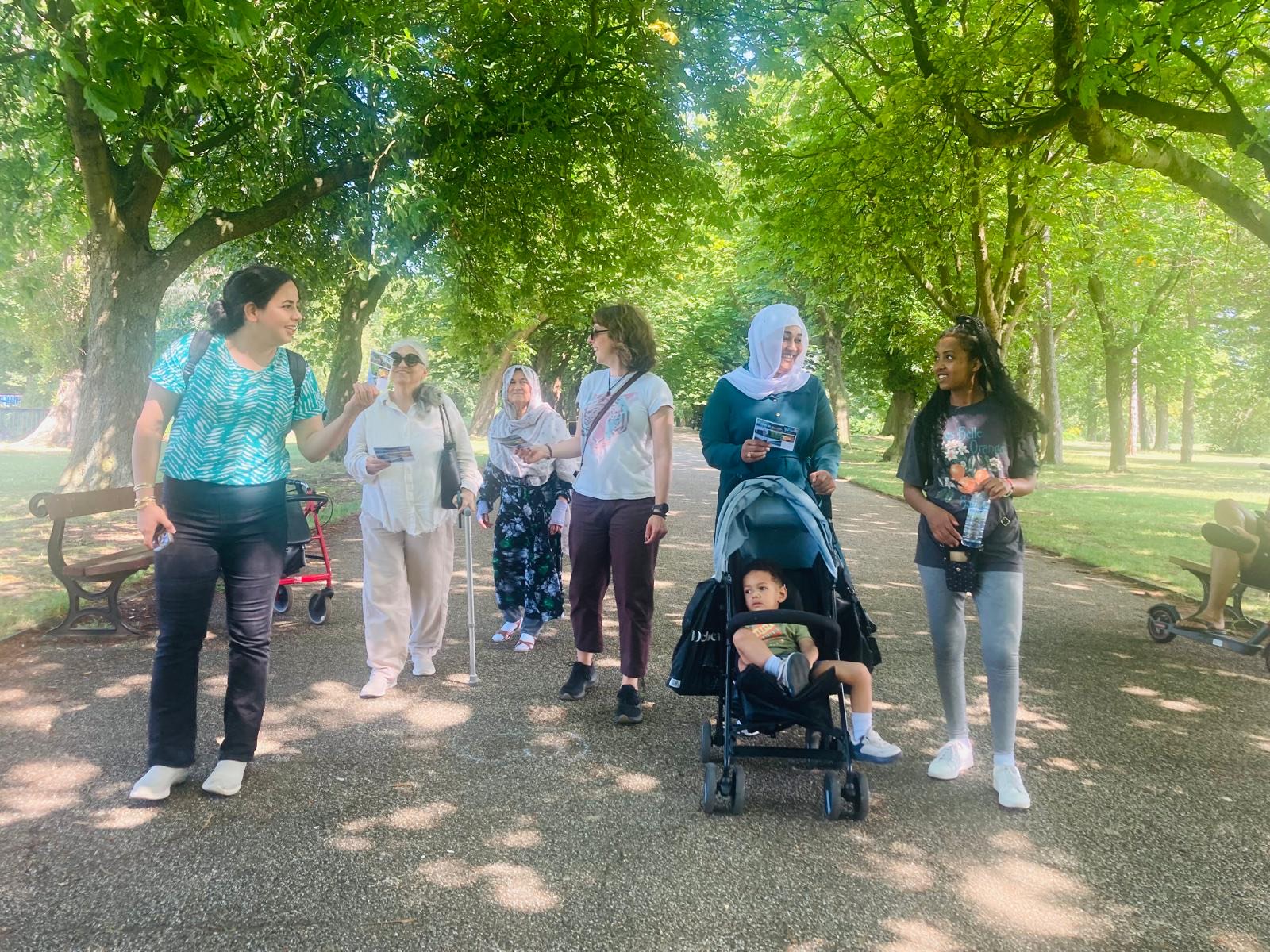
A friendly weekly walk in a local park for people who want to practise everyday English. No classroom. No pressure. Children welcome.
English practice, fresh air, friendly faces
Shared Words provides community support and education across Teesside. Walk and Talk helps people who speak English as an additional language build confidence by simply walking and talking.
Many people can't get to a formal ESOL class. They may be caring for young children, they may not feel confident enough yet, or they may simply not know what is available. Walk and Talk removes the classroom and keeps the learning: real conversation, practical language and a warm welcome, every week.
Small conversations can become lasting confidence.
Four things that make it work
Everything about the programme is designed to make the first step small, local and friendly.
Walking, not sitting
Conversation feels easier side by side than face to face. Walking gives everyone something to look at, talk about and point to.
Prompts you can prepare
Simple conversation prompts are shared through a WhatsApp group each week, so you can practise before you arrive and again afterwards, if you want to.
Trained volunteers
Local English-speaking volunteers walk with the group. They are not teachers — they listen, chat and help you feel comfortable.
Children are welcome
Bring your children with you. Prams, buggies and little ones are part of the group, and very welcome.
One hour a week in Albert Park
Gentle walking, relaxed conversation and practical prompts — with children very welcome.
Everything you need to know
- WhereAlbert Park, Middlesbrough. We meet at the main gates and walk from there.
- WhenWednesdays, 1:30–2:30pm. Come for the whole hour or just part of it.
- CostFree. There is nothing to pay and nothing to bring.
- ChildrenWelcome. Buggies and prams are fine on the park paths.
- BookingNone needed. Just turn up. If you'd rather tell us first, send a message.
- PaceGentle. We walk slowly, stop when we like, and sit down if anyone needs to.
How a session works
Five simple steps.
Prompts arrive during the week
An example dialogue and a few simple conversation prompts are shared in the WhatsApp group. You can look at them, practise, or ignore them entirely.
We meet at the park gates
Volunteers are there first with a warm hello. Nobody is asked to introduce themselves formally or say anything they don't want to.
We walk in small groups
Two or three participants with a volunteer. Side by side, at whatever pace suits the group, with the prompts there if conversation needs a nudge. We might change groups a few times, as repetition helps us remember.
You tell us what helped
What was useful? What was too hard? What do you want to be able to say next week? Your answers change the following session — that is how this works.
And then you come back
Confidence builds through repetition, not intensity. One hour, every week, in the same friendly place.
The WhatsApp group
A quiet, administrator-led group that carries the week's prompts and a reminder about Wednesday.
Prompts, not homework
Short and practical. Read them, use them, or don't — nobody is checking.
Privacy comes first
The group is administrator-led. Participants can post if they want to.
Two posts a week
We keep it light. No daily messages and no pressure to reply.
There's a place for you on the path
Whether you want to practise English, give an hour a week, or refer someone who would benefit — here's how to start.
Join a walk
For people who speak English as an additional language and want to practise in a friendly, informal way.
How to join →Volunteer
Give one hour a week to walk, listen and support conversation. No teaching qualification needed.
Volunteer with us →Partner or refer
For charities, community organisations, schools and services with people who would benefit.
Work with us →Join Walk and Talk
A friendly weekly walk for people who want to practise everyday English. We meet in Albert Park for gentle walking, relaxed conversation and practical prompts. Children welcome.
- It is free — There is nothing to pay, ever.
- Wednesdays, 1:30–2:30pm — Meet at the main gates of Albert Park, Middlesbrough.
- Bring your children — Buggies and little ones are part of the group.
- Any level of English — If you can say hello, you can come. Really.
Not sure yet?
That is completely normal. Most people feel nervous before the first walk.
You can come and just listen. You can bring a friend. You can leave after ten minutes if you want to. Nobody will ask you to read aloud, sit a test, or explain why you're there. The only thing we ask is that you come back the following week if you enjoyed it.
Can you give one hour a week?
Walk and Talk is looking for patient, welcoming volunteers to walk, listen and support confidence.
You are not being asked to teach. You are being asked to be good company: to walk slowly, ask friendly questions, wait while someone finds their words, and treat the person beside you as an equal.
What you'd do
Walk with two or three participants, use the week's prompts if conversation needs a nudge, and help everyone feel comfortable.
What you'd get
A short induction, a practical volunteer guide, the week's prompts in advance, and ongoing support from the project team.
What you'd gain
Time outdoors, new friendships across the community, and a genuinely useful hour in your week.
A simple route into English practice
Walk and Talk offers a low-pressure route into English practice for people who may not currently access formal ESOL. It complements existing provision rather than competing with it.
Please share Walk and Talk with anyone who would benefit from an informal, child-friendly setting. We can supply flyers and a short referral note.
Grounded in practice and evidence
Walk and Talk was developed with Suzanne Evans, Senior Lecturer in English Language in the School of Social Sciences, Humanities and Law at Teesside University, Middlesbrough. Her research and teaching focus on the English language, learning and teaching approaches.
Walk and Talk is co-created: participant feedback shapes the sessions week by week, and the resulting data supports an ESOL framework, approach and set of materials that other informal settings can adopt.
Walk and Talk translates TESOL research into an accessible community model
It supports language confidence, social integration, wellbeing and participant-led evaluation.
Suzanne Evans at Teesside University →Funded by IAA
The project in pictures
Images from the walks themselves. Participant images are only ever used with consent.
Say hello
Tell us you'd like to come, offer to volunteer, or ask us anything at all. We reply to everyone.